
Short Answer
Definition
Building larger telescopes in space refers to the development and deployment of astronomical observatories with significantly increased aperture sizes beyond current terrestrial and orbital instruments. These advanced telescopes aim to overcome Earth-based limitations by operating in the vacuum of space, enabling unprecedented clarity and depth in cosmic observations.
- Space-based telescopes:
Instruments positioned beyond Earth’s atmosphere to avoid atmospheric distortion and achieve superior image resolution. - Large aperture telescopes:
Telescopes with expansive mirror diameters designed to collect more light and resolve finer details in celestial objects. - Modular segmented mirrors:
Mirror systems composed of multiple smaller segments that unfold and align in space to form a large, coherent optical surface.
Historical Context and Evolution
Humanity’s exploration of the cosmos has been closely linked to the advancement of telescopic technology. From Galileo’s early refracting lenses to today’s sophisticated space observatories, each technological leap has expanded our understanding of the universe. The aspiration to construct even larger telescopes in orbit represents the next frontier, promising to revolutionize observational astronomy by surpassing the constraints imposed by Earth’s atmosphere and gravity.
Advantages of Space-Based Telescopes
Operating telescopes in space offers distinct benefits primarily due to the absence of atmospheric interference. Earth’s atmosphere causes turbulence that blurs and distorts incoming light, limiting the resolution achievable by ground-based observatories. Although adaptive optics can partially mitigate these effects, they cannot fully replicate the clarity of space-based observations.
- Atmospheric freedom:
Space telescopes avoid atmospheric distortion, enabling sharper and more detailed images. - Enhanced resolution:
Larger apertures in space can exploit this clarity to achieve diffraction-limited performance. - Broader wavelength access:
Space observatories can detect wavelengths blocked or absorbed by the atmosphere, such as ultraviolet and infrared.
Engineering Challenges in Space Telescope Construction
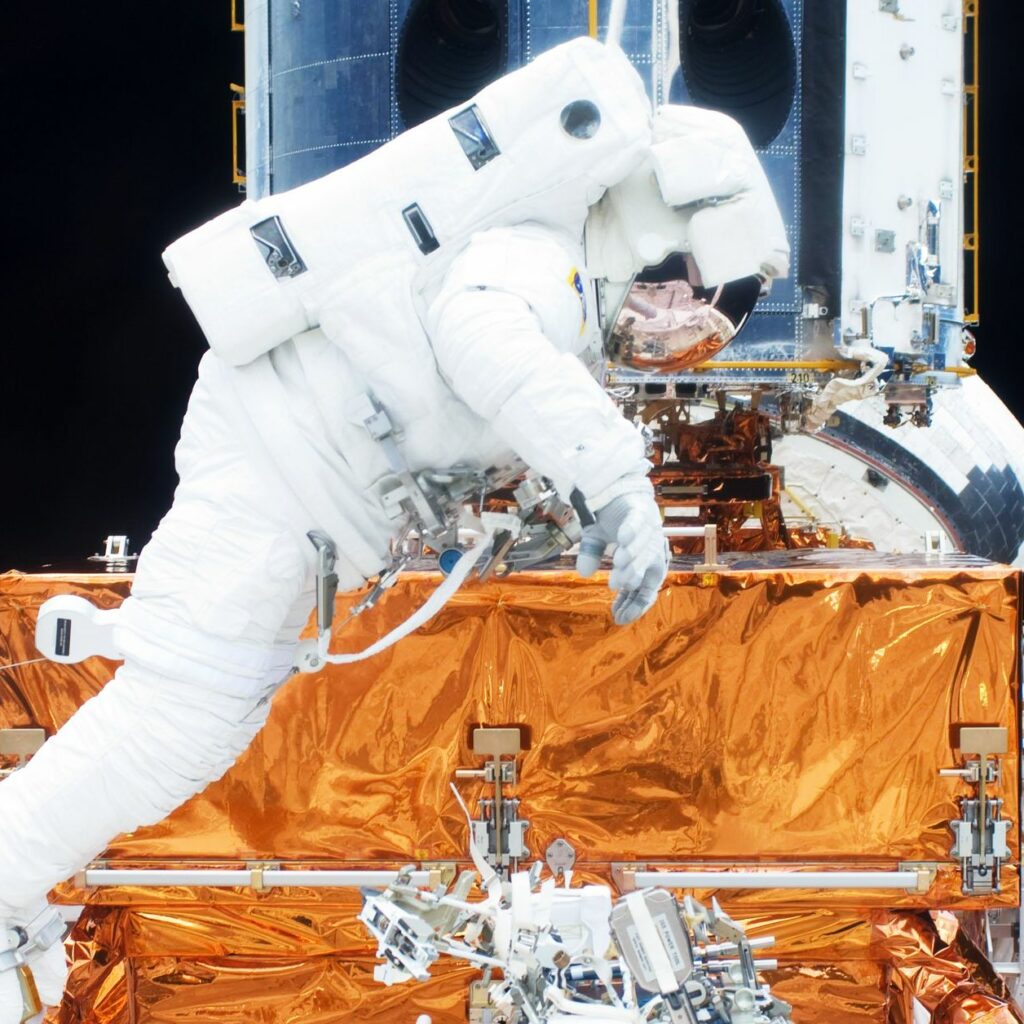
Designing and deploying massive telescopes in orbit introduces unique engineering obstacles. Unlike Earth-based telescopes, which must withstand gravity, wind, and seismic activity, space telescopes benefit from microgravity but face strict mass and volume constraints due to launch vehicle capacities. Additionally, thermal fluctuations, radiation exposure, and the inability to perform routine repairs complicate design and operation.
- Mass and volume limits:
Launch vehicles restrict the size and weight of components sent to space. - Thermal management:
Extreme temperature variations in space can deform optical elements, requiring advanced thermal control systems. - Maintenance constraints:
Limited or no in-situ repair capabilities necessitate highly reliable and fault-tolerant designs.
Innovative Design Solutions
To overcome these challenges, engineers are exploring modular and deployable telescope architectures. Segmented mirror designs, where multiple smaller mirrors unfold and align precisely in orbit, allow construction of apertures far larger than what can be launched as a single piece. This approach relies on sophisticated micro-positioning actuators and feedback systems to maintain optical coherence.
Advances in materials science also contribute significantly. Ultralightweight composites with adaptive surface properties can dynamically correct distortions, reducing launch mass while enhancing optical performance. Coupling these materials with cryogenic cooling systems helps stabilize temperature-induced deformations in the harsh space environment.
Assembly and Deployment Techniques
Building enormous telescopes in space may require in-orbit assembly, utilizing robotic systems or human missions to piece together modules delivered separately. This incremental construction method mitigates the need for a single massive launch and distributes complexity over time. Autonomous robotics, empowered by artificial intelligence, can perform precise assembly and calibration tasks with minimal human oversight, marking a new era in space manufacturing.
Scientific Opportunities Enabled by Larger Space Telescopes
Expanding telescope apertures in space unlocks transformative scientific capabilities. Larger mirrors gather more light, improving sensitivity and resolution, which is crucial for detecting and characterizing exoplanets, including analyzing their atmospheres for potential habitability. These telescopes can also observe faint, distant galaxies formed in the early universe, shedding light on cosmic evolution and structure formation.
Moreover, enhanced resolution aids gravitational lensing studies, deepening our understanding of dark matter distribution and the large-scale architecture of the cosmos. Incorporating multi-wavelength instruments-spanning infrared, ultraviolet, and submillimeter bands-further enriches the scientific yield by capturing diverse cosmic phenomena.
Common Misconceptions
Larger telescopes in space are simply scaled-up versions of ground telescopes.
Space telescopes require fundamentally different designs to address unique challenges such as launch constraints, thermal control, and autonomous operation.
Atmospheric distortion can be fully corrected by adaptive optics on Earth.
While adaptive optics improve ground-based observations, they cannot match the pristine clarity achievable in space.
In-orbit repairs are routine and straightforward.
Repairs in space are complex, costly, and often impractical, necessitating highly reliable and redundant systems.
Importance and Future Prospects
The pursuit of constructing larger telescopes in space is not merely a technical challenge but a profound expression of humanity’s quest to comprehend the universe. These instruments promise to revolutionize astronomy, enabling discoveries that could answer fundamental questions about the origin, evolution, and fate of the cosmos. Despite significant financial and logistical hurdles, international collaboration and technological innovation continue to drive progress toward realizing these ambitious observatories.
As scientific and engineering capabilities advance, the deployment of colossal space telescopes will redefine our cosmic perspective, offering insights unattainable from Earth and propelling astronomy into a new era of discovery.
FAQ
What are the benefits of space-based telescopes?
Space-based telescopes avoid atmospheric distortion, enabling sharper images, enhanced resolution, and access to broader wavelengths.
What challenges do engineers face in constructing space telescopes?
Engineers must address mass and volume limits, thermal management, and maintenance constraints due to the unique environment of space.




Leave a Reply