
Short Answer
Definition of Gravitational Wave Stretching
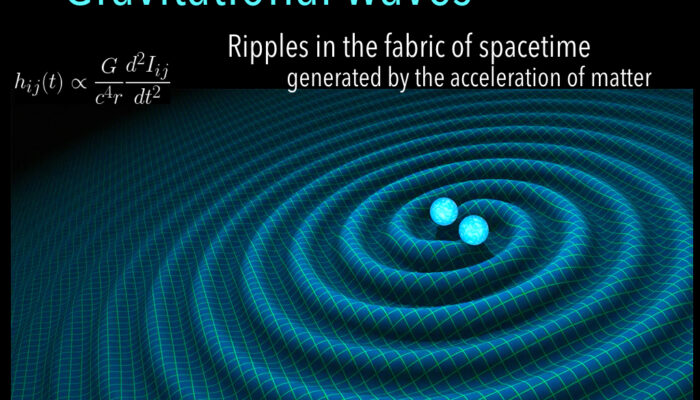
Gravitational waves are ripples in the fabric of spacetime caused by massive accelerating bodies, such as merging black holes or neutron stars. These waves propagate through the universe, causing minute oscillations in the distances between points in space. The phenomenon of “stretching” by gravitational waves refers not to the physical deformation of objects themselves, but to the dynamic alteration of the spatial geometry that defines distances and times.
- Spacetime fabric:
The four-dimensional continuum combining space and time, which can be curved and distorted by mass and energy. - Gravitational waves:
Disturbances in spacetime curvature that travel outward from energetic cosmic events, causing transient changes in spatial intervals. - Stretching effect:
The oscillatory expansion and contraction of proper distances between inertial observers or free-floating test masses, transverse to the wave’s direction.
Nature and Origin of Gravitational Waves
Gravitational waves arise from the acceleration of massive objects, particularly in violent astrophysical processes like black hole collisions or neutron star mergers. These events generate perturbations in the spacetime metric, which then radiate outward at the speed of light. Unlike waves on a water surface, gravitational waves do not move matter through a medium; instead, they modulate the geometry of spacetime itself.
Propagation Through Spacetime
As gravitational waves travel, they cause the distances between points in space to oscillate. This effect is transverse, meaning the stretching occurs perpendicular to the wave’s direction of travel. The waves produce a quadrupolar pattern of deformation, simultaneously elongating space along one axis while compressing it along the perpendicular axis.
Mechanism of Spacetime Distortion
The key to understanding what is stretched lies in the concept of the metric tensor in General Relativity. The metric defines how distances and times are measured between events in spacetime. Gravitational waves represent dynamic perturbations in this metric, altering the spatial intervals without exerting classical forces on matter.
- Metric tensor:
A mathematical object encoding the geometry of spacetime, determining lengths and durations. - Geodesics:
The paths followed by free-falling objects, which remain locally inertial despite the passing wave. - Tidal forces:
Differential stretching effects caused by variations in spacetime curvature, analogous to ocean tides induced by the Moon’s gravity.
Measurement and Detection
Gravitational wave detectors such as LIGO and Virgo measure the tiny changes in proper distance between suspended mirrors kilometers apart. Laser beams travel back and forth along these arms, and the passing wave alters the travel time by minuscule amounts. These changes manifest as phase shifts in the interference pattern of the laser light, revealing the spacetime stretching indirectly.
Proper Distance vs Coordinate Distance
Proper distance is the actual physical length measured by a ruler moving with the points in question, while coordinate distance depends on the chosen reference frame. Gravitational waves cause oscillations in proper distance, which are the physically meaningful quantities detected by interferometers.
Scale and Magnitude of the Effect
Although gravitational waves stretch spacetime, the magnitude of this effect on Earth is extraordinarily small. Typical strain amplitudes are on the order of 10-21, meaning a 4-kilometer interferometer arm changes length by less than a proton’s diameter. At atomic and molecular scales, electromagnetic and nuclear forces dominate, preventing any noticeable deformation of matter despite the passing waves.
Common Misconceptions About Gravitational Wave Stretching
Gravitational waves physically stretch objects like rubber bands.
The waves alter the geometry of spacetime, changing distances between objects without physically deforming the objects themselves.
Gravitational waves carry matter as they propagate.
These waves travel through spacetime’s geometry and do not transport matter or energy in the conventional sense.
Atoms and molecules are stretched by gravitational waves.
The effect on atomic scales is negligible due to dominant electromagnetic and nuclear forces maintaining structural integrity.
Significance in Physics and Cosmology
The detection and study of gravitational waves provide profound confirmation of Einstein’s theory of General Relativity, demonstrating that gravity is a manifestation of spacetime geometry in motion. These waves open a new observational window into the universe, allowing scientists to probe cataclysmic events billions of light-years away and to explore the dynamic nature of the cosmos.
Implications for Understanding the Universe
Gravitational waves reveal that space is not an empty void but a dynamic, undulating fabric capable of carrying information about the most energetic phenomena in the universe. As detection technology advances, these ripples will continue to uncover hidden aspects of gravity, matter, and the fundamental structure of spacetime.
Summary: What Exactly Gets Stretched?
In essence, gravitational waves do not stretch matter in a conventional sense. Instead, they modulate the metric that defines spatial and temporal intervals, causing distances between inertial observers and free-floating test masses to oscillate. This subtle stretching is a manifestation of the dynamic geometry of spacetime itself, a concept central to modern physics and our understanding of gravity.
FAQ
What is the significance of gravitational waves in physics?
Gravitational waves confirm Einstein's theory of General Relativity and provide insights into cataclysmic cosmic events.
How are gravitational waves detected?
They are detected by measuring tiny changes in distance between suspended mirrors in interferometers.

Leave a Reply