In recent decades, the quest to comprehend the potential for extraterrestrial life has burgeoned into a compelling intersection of astrobiology, cosmology, and chemistry. The fundamental question remains: how common, or rare, is alien life in the expansive Universe? The answer to this question is crucial as it reshapes our understanding of life, its origin, and its ubiquity. Contrary to previous assumptions positing that life should be relatively prevalent throughout the cosmos, emerging studies suggest that the existence of alien life may indeed be much rarer than initially thought. This discourse endeavors to elucidate the intricacies of this phenomenon, dissecting factors contributing to such rarity while also acknowledging the broader implications of this realization.
Traditionally, the estimation of extraterrestrial life has been bolstered by the vastness of the Universe. It is often posited that, given the sheer number of stars—approximately 100 billion in our Milky Way galaxy alone—and the potentially habitable planets orbiting these stars, life should exist beyond Earth. However, a critical analysis reveals a multitude of variables that complicate this hypothesis. Recent studies illuminate the staggering number of prerequisites necessary for life as we understand it to emerge and thrive. From the availability of liquid water to the presence of essential chemical elements, each factor conjoins to create a significantly restrictive set of criteria.
One poignant consideration is the impact of cosmic events on the potential for life. Events such as gamma-ray bursts, supernovae, and even the eventual fate of stellar lifecycles pose existential threats to nascent life forms. The intervals during which conditions may be conducive to life are often punctuated by moments of extreme environmental volatility. Thus, planets residing in zones where life could potentially flourish might experience catastrophic events that render them sterile.
Moreover, the conditions required for life encompass not only biochemistry but also geological stability. Terrestrial ecosystems have thrived over geological epochs due to particular planetary conditions, including tectonic activity and magnetic field generation. The failure of these geological mechanisms can lead to a slowed development of complex life, heightening the likelihood that planets remain barren throughout their existence. This delicate nexus between geological phenomena and biological evolution signifies that countless planets may remain devoid of life despite physical conditions appearing favorable.
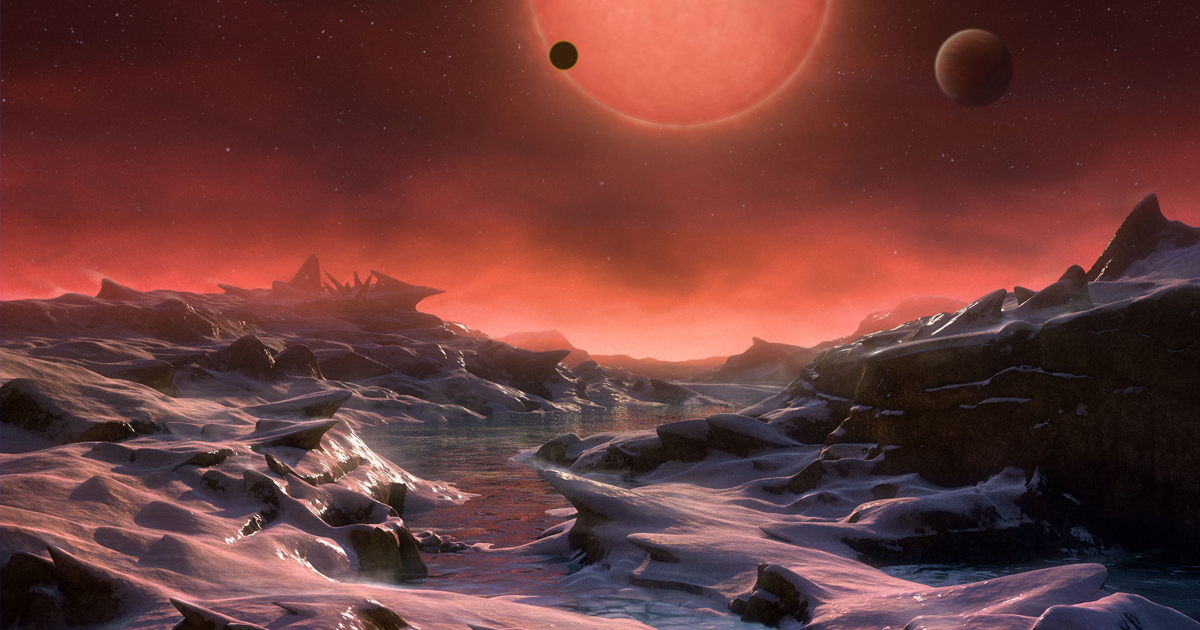
The search for exoplanets within the so-called “Goldilocks Zone”—the region around a star where temperatures allow for liquid water—is only one aspect of the astrobiological inquiry. Investigations into planetary atmospheres have unveiled the complexity and fragility of sustaining life. For example, the presence of greenhouse gases is necessary, yet an imbalance can lead to inhospitable climates. The interaction between a planet’s atmosphere and its ecological prospects elucidates the precarious nature of life’s development within diverse cosmic environments.
Another critical aspect pertains to biological factors affecting the emergence of life. The evolutionary paths taken by life on Earth—including random genetic mutations and selective pressures—illustrate the stochasticity inherent in biological evolution. The complexity of biogenesis involves an intricate array of molecular interactions that may only occur under very narrow conditions. Extrapolating these scenarios to extraterrestrial environments raises the sobering prospect that life might be an almost unimaginably improbable occurrence.
These contemporary considerations offer a revised perspective influenced by the work of astrophysicists, chemists, and geologists. The formulation of the Drake Equation, initially crafted to estimate the number of active extraterrestrial civilizations in our galaxy, illuminated the gaps in our knowledge of planetary habitability. Each variable of the equation—such as the rate of star formation and the fraction of stars with planets—requires empirical grounding. Difficulties in estimating these variables have led to divergent opinions about the likelihood of alien civilizations, revealing a chasm between idealistic projections and realistic constraints.
Furthermore, the Fermi Paradox, which interrogates why we have not yet made contact with extraterrestrial civilizations if they are indeed common, remains pertinent. This tension between expectation and absence propels inquiry into the implications of our solitude in the cosmos. If intelligent life, capable of communication and technological advancement, is exceedingly rare, it raises profound questions regarding the role and significance of humanity within the grand narrative of the Universe.
The implications of these findings extend beyond mere conjecture. Should the rarity of extraterrestrial life be affirmed, it invites deeper reflections on existential themes, such as the responsibility and stewardship of our planet. It posits humanity as perhaps the rarer subset of conscious existence. This philosophical pivot urges a commitment toward sustainability, ecological conservation, and responsibility towards our own biosphere, recognizing the singularity of our achievements and struggles in the grand tapestry of life.
In summary, the complexities surrounding the emergence of alien life present a captivating yet sobering panorama. Factors encompassing cosmic events, planetary conditions, and the nature of biological evolution converge to reveal a universe in which life is not merely a ubiquitous byproduct of stellar phenomena. This reaffirmation of the rarity of alien life compels scientists and philosophers alike to reevaluate our place within this vast expanse, embracing the notion that perhaps our existence is not only unique but also precious. The universe, as imagined, may indeed be far lonelier than one could have hoped.