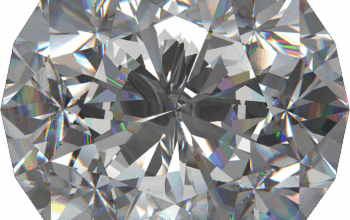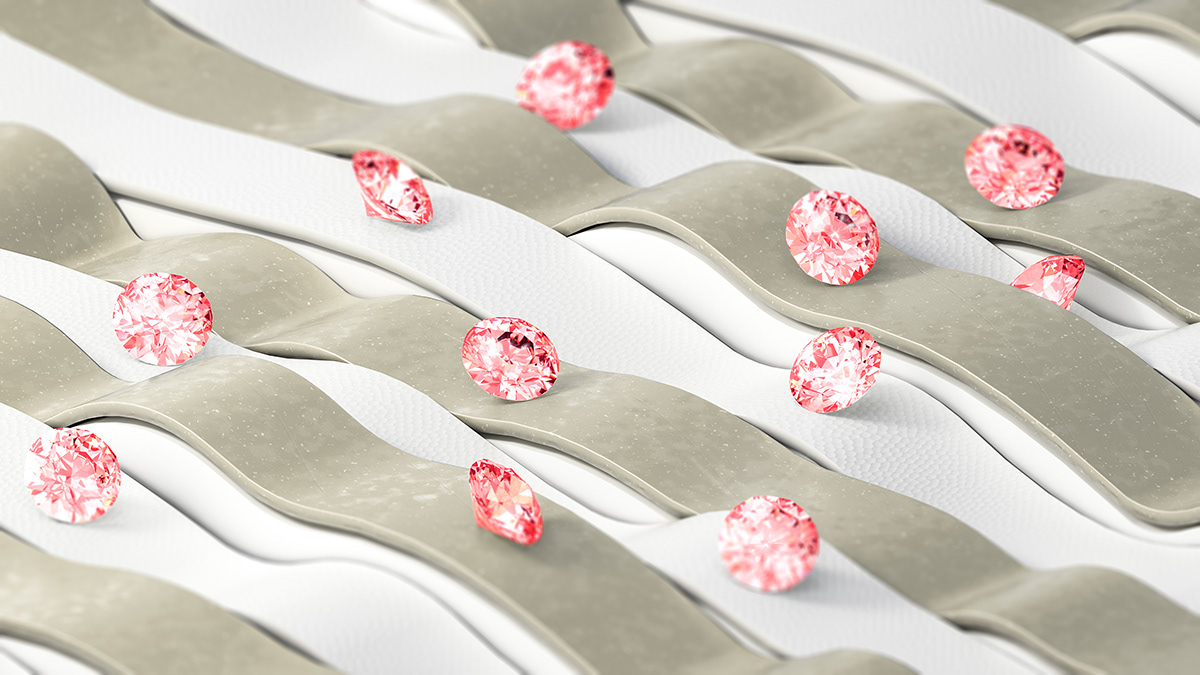
Diamonds, lauded for their extraordinary physical properties and their symbolic association with eternal love, embody a paradox worth examining: the tenuous relationship between perceived perfection and physical reality. The phrase “diamonds are not forever” serves as a profound metaphor in the realm of physics, underscoring the inevitability of imperfection and decay within even the most seemingly indestructible materials. This discourse will elucidate the multifaceted failures of perfection within the realm of physics, particularly as they relate to diamond-like structures, representing both crystalline beauty and the underlying reality of physical laws.
The elemental composition of diamonds, comprising carbon atoms in a tetrahedral lattice, confers unparalleled hardness—a property glorified in both scientific circles and popular culture. However, despite their reputation, diamonds are not impervious to the laws of thermodynamics. Over geological timescales, one must acknowledge the propensity for diamonds to metamorphose into graphite, the more stable form of carbon under standard conditions. This transformation is governed by the principles of entropy and energy minimization, exemplifying how a state of apparent perfection can yield to a more thermodynamically favorable configuration. The concept of energy landscapes in solid-state physics elucidates this phenomenon by portraying how diverse potential states exist, dictating the material’s transition over time.
Furthermore, diamonds exhibit flaws and inclusions that can significantly compromise their integrity and aesthetic appeal. These imperfections often arise during their formation deep within the Earth’s mantle, where variations in temperature and pressure lead to the incorporation of foreign elements. Such inclusions disrupt the crystalline symmetry that characterizes ideal diamonds and provides insight into the dynamic processes governing geochemical environments. An examination of these flaws offers a compelling narrative regarding the unpredictability inherent in material science. The quest for flawless diamonds, while symbolizing human aspiration towards perfection, ultimately highlights the physical limitations shaped by natural processes.
The juxtaposition of diamonds as a model of perfection against their intrinsic imperfections dovetails with broader implications within physics, particularly concerning the nature of materials. In the quantum mechanical realm, the notion of zero defects becomes increasingly elusive. Advanced materials, such as graphene and carbon nanotubes, promise superior strength and conductivity, but upon synthesis, defects often emerge that alter their expected performance. This deviation from anticipated behavior epitomizes the principle of emergent phenomena, where simple rules give rise to unexpected complexity, exemplifying the delicate balance between theoretical constructs and empirical observations.
In delineating the characteristics of diamonds, one must consider their thermal conductivity, which, unlike most other materials, remains extraordinarily high. This property renders diamonds useful in cutting-edge technologies, where efficient heat dissipation is paramount. However, the thermal conductivity in diamonds is contingent upon the intrinsic purity and the absence of defects. The paradox exemplifies the duality of diamonds as both a practical material and a symbol of idealized perfection. Such dualities catalyze inquiries into the applicability of traditional models in capturing the intricate interactions that define material behavior under diverse conditions.
Moreover, the phenomenon of diamond luminescence, whereby certain imperfections serve as activators for photoluminescence, introduces another layer of complexity to the narrative of perfection. The presence of nitrogen defects, for instance, engenders the captivating blue hue observed in some diamonds, primarily driven by the interactions between light and atomic structures. Here, imperfection becomes a conduit for beauty, challenging the deterministic outlook of classical physics, which posits that the absence of defects is synonymous with excellence. This invites a reevaluation of standards by which we gauge worth, both in materials and, by extension, in abstract constructs within theoretical frameworks.
Transitioning from the microscopic realm to macroscopic implications, it is imperative to address the societal constructs surrounding diamonds as markers of status and success. The marketing of diamonds as timeless symbols betrays the intrinsic temporality of all material entities. As concepts of sustainability and ethical sourcing gain prominence in contemporary discourse, the fabric of desirability associated with diamonds undergoes scrutiny. The advancement of synthetic diamonds, which mimic the physical properties of natural diamonds without the environmental toll of mining, signals a paradigm shift in perceptions of value and perfection. The emergence of lab-grown diamonds recontextualizes the notion of rarity, inviting dialogues around authenticity and societal agreements regarding worth.
In conclusion, while diamonds may capture the imagination through their aesthetic allure and reputed durability, the inherent characteristics of these precious gems decouple the association of perfection from permanence. The failure of diamonds to remain unchanged over time serves as a microcosm of a more profound truth within the laws of physics: imperfection exists as an inherent aspect of the material universe. This exploration into the nature of diamonds epitomizes the fragility of the concept of perfection, urging a reevaluation of how we perceive and interact with the world around us. The intricate dance between structure and agency, between theory and observation, reveals a nuanced landscape, rife with possibilities, where beauty lies not in flawlessness, but in the authenticity of existence itself.