Condensed matter physics is a vibrant field that explores the macroscopic physical properties of matter, particularly at the atomic and subatomic scales. It encompasses a diverse array of phenomena, which are deeply intertwined with concepts from quantum mechanics and crystallography. Among its sprawling variety of topics, some of the most enticing and pivotal advances arise from the study of Dirac materials, which exhibit unique characteristics attributed to relativistic effects. This article delves into how condensed matter physicists have garnered recognition for their pioneering research into Dirac materials, the implications of their discoveries, and the existential questions they pose about the nature of matter itself.
At the heart of this discourse lies the question: What happens when the fundamental principles of particle physics merge with solid-state systems? The advent of materials that display Dirac-like behavior calls into question traditional models and opens doors to novel applications ranging from quantum computing to advanced electronic devices. Dirac materials fundamentally alter the landscape of condensed matter physics, provoking not just curiosity but also immense scholarly recognition for those brave enough to navigate its intricate terrain.
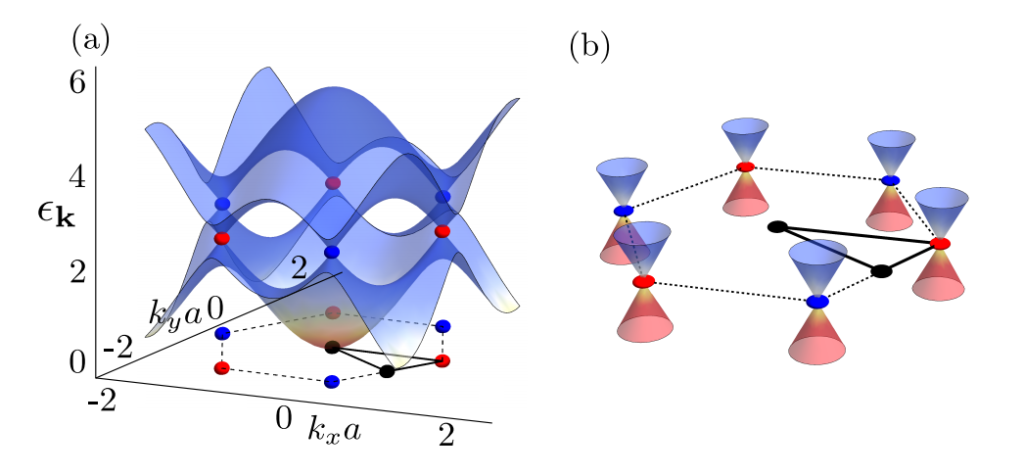
Dirac materials are defined by their electronic band structure, characterized by the presence of Dirac cones, wherein the conduction and valence bands meet at discrete points in momentum space, allowing for massless quasiparticles. Graphene, perhaps the most famous Dirac material, showcases these fascinating properties with its two-dimensional honeycomb lattice structure, which empowers electrons to traverse the material with astonishing mobility. Experimental confirmation of Dirac cones in various three-dimensional materials, such as topological insulators and Weyl semimetals, further emphasizes the scope of research in this domain.
The recognition bestowed upon condensed matter physicists in relation to Dirac materials extends beyond accolades; it encapsulates a paradigm shift in understanding quantum phenomena. This shift aligns with the burgeoning interest in exploring materials that exhibit topological order—an esoteric term that describes properties that remain invariant under certain transformations. Researchers are articulating the significance of topologically protected states, wherein electrons can traverse defects and impurities without scattering, potentially revolutionizing electronic devices.
However, this exploration brings forth a conundrum: Are we witnessing a mere manifestation of theoretical constructs, or are we on the brink of realizing practical applications that could redefine technology? The promise of Dirac materials in applications such as spintronics—where the intrinsic spin of electrons is manipulated to create devices that operate on novel principles—invites skepticism yet also inspires optimism among researchers. The dual nature of these materials underscores a tantalizing challenge: translating theoretical frameworks into viable technological solutions.
As research proliferates, it becomes increasingly apparent that Dirac materials could pave the way toward the development of quantum computers, which harness the principles of superposition and entanglement. The quest to achieve a robust quantum state within these materials has catalyzed innovative experimental techniques and heralded an unprecedented collaboration among physicists, chemists, and materials scientists. Indeed, the requirement for interdisciplinary synergy points toward an emerging philosophy that transcends traditional boundaries.
Yet, with all advancements comes an ethical responsibility. The rapid iteration of experiments risks obfuscating the foundational theory behind Dirac materials. It conjures a pivotal query: in the race to apply theoretical breakthroughs, are fundamental principles being compromised? The financial implications surrounding funding for research, the potential for misapplication of findings, and implications for society at large necessitate careful consideration. These ethical dimensions serve as a sobering reminder for the scientific community to balance ambition with caution.
Furthermore, the study of Dirac materials prompts contemplative reflections on the nature of reality. As physicists probe deeper into the properties of these materials, they unveil questions of existence and the very fabric of the universe. The interplay of electrons under relativistic constraints may not merely define interactions at the atomic scale; rather, it invites philosophical inquiries into the essence of matter and the limits of human understanding. Herein lies another playful question: If Dirac materials alter our perception of reality, how do they shape our interpretations of the universe itself?
The future of Dirac materials is replete with possibilities. The promise of discovering new materials with exotic properties remains tantalizingly within reach, yet eminent challenges persist. The intricate synthesis of these materials, along with the characterization techniques required to elucidate their unique properties, continues to challenge researchers. Novel methodologies, such as advanced laser characterization or atomically precise fabrication methods, are crucial in the quest to unlock subsequent generations of Dirac materials.
In summary, condensed matter physicists earn Dirac recognition through tenacious exploration of materials that embody both theoretical and practical significance. As they confront existential questions and navigate the challenges inherent in this endeavor, they contribute to a profound understanding of the synergy between theory and application. The journey into Dirac materials not only transforms technology; it holds the potential to redefine our comprehension of the universe. Thus, the recognition of these physicists becomes more than a testament to their accomplishments—it epitomizes a collective intellectual pursuit of transformation and understanding that resonates with the very foundations of scientific inquiry.