
Short Answer
Definition of Gravitational Compression
Gravitational compression refers to the process by which gravity exerts an intense inward force on matter, causing it to condense into increasingly dense states. This phenomenon is fundamental in shaping cosmic structures, from planets and stars to the most extreme objects in the universe such as neutron stars and black holes. It represents the dynamic tension between gravity’s pull and the opposing forces that resist collapse, playing a crucial role in astrophysics and cosmology.
Fundamental Principles of Gravity
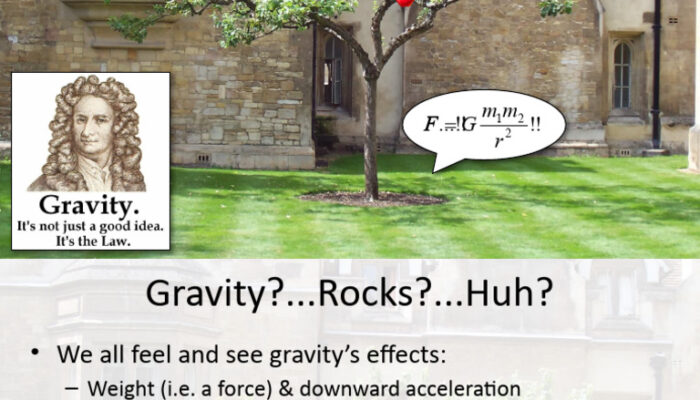
Gravity is the universal force that attracts masses toward one another, governing the motion of celestial bodies and the structure of the cosmos. On Earth, it manifests as the familiar pull that keeps us grounded and causes objects to fall. However, gravity’s influence extends far beyond everyday experience, becoming extraordinarily powerful when vast amounts of matter accumulate.
- Everyday Gravity:
The force responsible for objects falling, rivers flowing downhill, and atmospheres remaining bound to planets. - Cosmic Gravity:
The dominant force shaping stars, galaxies, and the large-scale structure of the universe.
Mechanism of Gravitational Compression
Gravitational compression arises from the competition between the inward pull of gravity and the outward pressure generated by internal forces within matter. In typical conditions, these forces balance, maintaining stable structures. However, when gravity overwhelms these resistive pressures, matter is forced into denser and more compact states.
For example, in massive stars, once nuclear fusion ceases to provide sufficient outward pressure, gravity causes the core to collapse. This collapse triggers a sequence of transformations, compressing matter to extraordinary densities.
Stages of Compression in Stellar Evolution
The collapse of a star’s core under gravity leads to several critical phases:
- Neutron Star Formation:
Gravity compresses electrons and protons into neutrons, creating an ultra-dense object where a small volume contains mass billions of times greater than everyday matter. - Black Hole Creation:
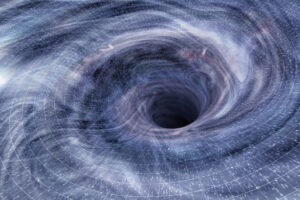
For stars with even greater mass, gravity surpasses the neutron degeneracy pressure, continuing compression until a singularity forms-a point of infinite density surrounded by an event horizon from which nothing can escape.
Mathematical Description of Gravitational Compression
The intensity of gravitational compression can be described using the equations of general relativity and quantum mechanics, though a complete theory remains elusive. Key concepts include:
- Schwarzschild Radius (rs):
Defines the radius of the event horizon for a non-rotating black hole:
rs = 2GM / c², where G is the gravitational constant, M is the mass, and c is the speed of light. - Degeneracy Pressure:
Quantum mechanical pressure arising from the Pauli exclusion principle, resisting compression in neutron stars.
Phenomena Associated with Extreme Gravitational Compression
When gravity compresses matter to its limits, several remarkable effects emerge:
- Event Horizon:
The boundary around a black hole beyond which no information or matter can escape. - Singularity:
A theoretical point of infinite density where classical physics breaks down. - Gravitational Time Dilation:
Time slows down near massive objects relative to distant observers, a prediction confirmed by observations near black holes and neutron stars.
Real-World Examples of Gravitational Compression
Astrophysical objects provide tangible instances of gravitational compression:
- Neutron Stars:
Remnants of supernova explosions, exhibiting densities so extreme that a teaspoon of their matter weighs billions of tons. - Black Holes:
Formed from the collapse of massive stars, these objects warp spacetime to such an extent that light cannot escape their gravitational pull. - Gravitational Waves:
Ripples in spacetime generated by events like black hole mergers, offering insights into the nature of extreme gravity.
Common Misconceptions About Gravitational Compression
Black holes are cosmic vacuum cleaners that suck in everything indiscriminately.
Black holes exert gravitational pull like any other mass; objects must cross the event horizon to be trapped.
Singularities are physical points that can be directly observed.
Singularities are theoretical constructs where current physics breaks down and cannot be observed directly.
Significance of Gravitational Compression in Science and Technology
Understanding gravitational compression is vital for multiple reasons:
- Astrophysical Insight:
It explains the life cycles of stars and the formation of exotic objects like neutron stars and black holes. - Fundamental Physics:
Challenges in describing singularities drive research into quantum gravity and unified theories. - Technological Advances:
Detection of gravitational waves has opened new observational windows into the universe.
Philosophical and Cultural Impact
The extreme states produced by gravitational compression inspire profound questions about the nature of reality, existence, and the limits of human knowledge. Black holes, in particular, symbolize the boundary between the known and the unknown, influencing both scientific thought and popular culture. They evoke themes of mystery, transformation, and the infinite, fueling imagination across disciplines.
Conclusion: The Dual Nature of Gravity
Gravitational compression embodies the paradox of gravity as both a familiar force and a gateway to cosmic extremes. It shapes the universe’s grand architecture while challenging our understanding of physics at its most fundamental level. As research progresses, these extreme conditions continue to illuminate the delicate balance between matter, space, and time, inviting humanity to explore the profound mysteries woven into the fabric of the cosmos.
FAQ
What is gravitational compression?
Gravitational compression is the process by which gravity exerts an inward force on matter, causing it to condense into denser states, particularly in cosmic structures like stars and black holes.
What happens during the formation of a black hole?
During the formation of a black hole, gravity overwhelms all other forces, compressing matter to a point of singularity, beyond which nothing can escape.
Leave a Reply