
Short Answer
Understanding Quantum Gravity
Quantum gravity represents the ambitious scientific endeavor to unify gravity with the principles of quantum mechanics. Traditionally, gravity is described by Einstein’s general relativity as a smooth, continuous curvature of spacetime. In contrast, the other three fundamental forces-electromagnetic, weak nuclear, and strong nuclear-are successfully explained within the quantum framework. Quantum gravity seeks to bridge this divide by formulating a theory that captures gravity’s behavior at the smallest scales, potentially unlocking profound insights into phenomena such as black holes, the Big Bang, and the fundamental nature of reality.
Challenges in Directly Testing Quantum Gravity
One of the most formidable obstacles in quantum gravity research is the difficulty of direct experimental verification. The effects of quantum gravity are expected to become significant only at the Planck scale, approximately 10-35 meters, corresponding to energies near 1019 GeV. These scales are far beyond the reach of current or foreseeable particle accelerators, making direct detection of quantum gravitational quanta-often called gravitons-impractical with existing technology. The immense energy requirements and minuscule length scales place direct experimentation well beyond our present capabilities.
Indirect Approaches to Probing Quantum Gravity
Given the impracticality of direct tests, researchers have turned to indirect methods that might reveal subtle quantum gravitational effects at accessible scales. These approaches include:
- Cosmic Microwave Background (CMB) Analysis:
The CMB, the residual radiation from the Big Bang, may contain faint signatures of quantum gravitational fluctuations from the universe’s earliest moments. Detecting these subtle imprints requires highly sensitive instruments and sophisticated theoretical models to distinguish them from other astrophysical phenomena. - Quantum Entanglement Experiments:
Innovative laboratory experiments aim to observe whether gravity can induce entanglement between quantum systems cooled to near absolute zero. Such findings could provide indirect evidence of gravity’s quantum nature by demonstrating gravitationally mediated quantum correlations.
Experimental and Technological Hurdles
Despite these promising avenues, the extreme weakness of gravitational interactions at laboratory scales poses significant challenges. Gravitational forces are vastly weaker than electromagnetic and nuclear forces, and environmental noise can easily obscure potential signals. Achieving the necessary isolation and precision demands cutting-edge technology and novel experimental methodologies. Moreover, the conceptual frameworks guiding these experiments must evolve to accommodate the unique nature of quantum gravity.
Diverse Theoretical Frameworks and Their Implications
The absence of a universally accepted quantum gravity theory complicates experimental design. Several competing models offer distinct predictions about how quantum gravity might manifest:
- String Theory:
Proposes that fundamental particles are one-dimensional strings vibrating in higher-dimensional spaces, potentially unifying all forces including gravity. - Loop Quantum Gravity:
Suggests that spacetime itself is composed of discrete, quantized loops, providing a granular structure to the fabric of the universe. - Causal Dynamical Triangulations and Emergent Gravity:
Offer alternative views on spacetime’s nature, each with unique experimental expectations.
These varied theoretical landscapes produce different experimental signatures, making it challenging to design tests that conclusively validate or falsify any single approach.
Role of Gravitational Wave Astronomy
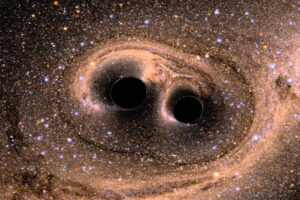
The advent of gravitational wave detection by observatories such as LIGO and Virgo has opened new possibilities for exploring strong gravity regimes. Gravitational waves-ripples in spacetime generated by cataclysmic events like black hole mergers-may carry subtle quantum gravitational effects. Researchers are investigating whether phenomena such as echoes, polarization anomalies, or quantization signatures in these waves could provide indirect evidence of quantum gravity. Although still speculative, gravitational wave astronomy enriches the experimental toolkit for probing the quantum aspects of gravity.
Future Prospects and Technological Innovations
Looking ahead, advancements in technology could bring us closer to testing quantum gravity. Potential developments include:
- Next-Generation Particle Accelerators:
Envisioned to reach unprecedented energy scales, possibly approaching the Planck regime. - Ultra-Sensitive Space-Based Detectors:
Designed to minimize environmental noise and detect faint quantum gravitational signals. - Novel Quantum Sensors:
Exploiting quantum coherence and entanglement to enhance measurement precision.
While these innovations remain speculative, history demonstrates that scientific ingenuity often overcomes seemingly insurmountable barriers, transforming today’s impossibilities into tomorrow’s realities.
Significance of Testing Quantum Gravity
Exploring the quantum nature of gravity is not merely an academic pursuit; it strikes at the heart of understanding the universe’s fundamental workings. Successfully integrating gravity into the quantum framework could revolutionize physics, offering insights into the origin of the cosmos, the behavior of black holes, and the unification of all fundamental forces. The endeavor challenges scientists to rethink established paradigms, develop novel experimental techniques, and foster interdisciplinary collaboration.
Common Misconceptions About Quantum Gravity Testing
Quantum gravity effects can be easily observed with current particle accelerators.
The energy scales required to detect quantum gravity phenomena are many orders of magnitude beyond the capabilities of existing accelerators.
Gravity is already a quantum force like the others.
Unlike electromagnetic and nuclear forces, gravity has not yet been successfully described by a quantum theory at accessible scales.
Indirect methods provide definitive proof of quantum gravity.
Indirect signatures are suggestive but require careful interpretation and cannot conclusively confirm quantum gravity without complementary evidence.
Conclusion: The Ongoing Quest
The question of whether quantum gravity can ever be tested directly remains open, shaped by both technological limitations and theoretical uncertainties. Progress depends on innovative thinking, interdisciplinary efforts, and the development of new experimental paradigms. Each step forward, whether through direct or indirect means, deepens our grasp of the universe’s most profound mysteries. The pursuit of quantum gravity exemplifies humanity’s enduring drive to comprehend the cosmos in its entirety, inspiring future generations to dream boldly and explore relentlessly.
FAQ
What are the main theories of quantum gravity?
The main theories include string theory, loop quantum gravity, and causal dynamical triangulations.
How might future technology aid in testing quantum gravity?
Advancements such as next-generation particle accelerators and ultra-sensitive detectors could help in exploring quantum gravity.
Leave a Reply