

Short Answer
Definition of Dark Energy
Dark energy is a mysterious and largely unknown form of energy that permeates all of space and is responsible for the accelerated expansion of the universe. Unlike ordinary matter or dark matter, dark energy exerts a repulsive force that counteracts gravity, causing galaxies to move away from each other at an increasing rate. It is a fundamental component in modern cosmology, yet its exact nature remains elusive.
- Invisible and Uniform:
Dark energy is not directly observable and appears to be evenly distributed throughout the cosmos. - Dominant Cosmic Component:
It constitutes approximately 68% of the total energy content of the universe, surpassing both dark matter and ordinary matter.
Historical Context and Discovery
Before the late 20th century, the prevailing belief was that gravity would slow down the expansion of the universe, potentially leading to a future collapse or a steady state. However, observations in the 1990s of distant Type Ia supernovae revealed that the universe’s expansion is accelerating rather than decelerating. This unexpected finding led to the introduction of dark energy as a new cosmic ingredient that drives this acceleration, fundamentally altering our understanding of the universe’s fate.
Physical Interpretation and Mechanism
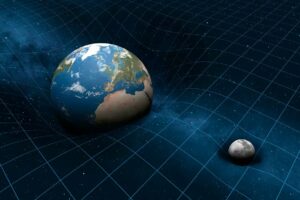
Modern physics conceptualizes space not as a static stage but as a dynamic fabric known as spacetime, capable of stretching and bending. Dark energy is intimately connected to this fabric, exerting a negative pressure that causes spacetime to expand at an accelerating pace. Unlike matter, which clumps under gravity, dark energy remains diffuse and maintains a nearly constant density even as the universe grows larger. This property results in an exponential increase in the scale of the cosmos over time.
The Cosmological Constant and Alternative Models
One of the primary theoretical descriptions of dark energy is the cosmological constant, a concept introduced by Albert Einstein. It represents a constant energy density inherent to empty space, providing a simple explanation for the observed acceleration. However, some scientists propose that dark energy might be dynamic rather than constant, evolving over time in a manner described by models such as quintessence. These alternative theories suggest that the strength and effects of dark energy could change, influencing the universe’s long-term evolution.
Methods of Observation and Measurement
Astronomers utilize several observational techniques to study dark energy and its impact on cosmic expansion:
- Type Ia Supernovae:
These stellar explosions serve as “standard candles” for measuring vast cosmic distances, revealing the acceleration of the universe. - Baryon Acoustic Oscillations (BAO):
BAO are periodic fluctuations in the density of visible baryonic matter, acting as cosmic rulers to track expansion history. - Cosmic Microwave Background (CMB):
The CMB provides a snapshot of the early universe, offering indirect constraints on the amount and nature of dark energy.
By combining data from these diverse sources, scientists refine theoretical models and improve predictions about the universe’s destiny.
Potential Cosmic Outcomes Influenced by Dark Energy
The presence of dark energy leads to several speculative scenarios regarding the universe’s future:
- The Big Rip:
If dark energy’s repulsive force remains constant or intensifies, it could eventually overpower all gravitational and atomic forces, tearing apart galaxies, solar systems, atoms, and ultimately spacetime itself. - Variable Dark Energy:
Should dark energy weaken or fluctuate over time, it might slow or reverse cosmic expansion, potentially leading to cycles of expansion and contraction in the universe.
These possibilities highlight the critical importance of understanding dark energy’s properties to predict the ultimate fate of the cosmos.
Theoretical Challenges and the Cosmological Constant Problem
Dark energy sits at the crossroads of quantum mechanics, general relativity, and cosmology-fields that have yet to be fully reconciled. Quantum field theory predicts a vacuum energy density vastly larger than what cosmological observations suggest, creating a significant discrepancy known as the cosmological constant problem. Resolving this issue demands innovative theoretical approaches and may require revisiting fundamental assumptions about the universe’s structure and origins.
Future Research and Observational Prospects
Upcoming astronomical missions and experiments aim to map the universe’s expansion with unprecedented accuracy. These include surveys targeting subtle distortions in the large-scale structure of the cosmos, gravitational lensing effects, and enhanced supernova measurements. The data collected will either reinforce current models of dark energy or lead to groundbreaking discoveries that reshape our understanding of cosmic acceleration.
Impact on Cosmic Structure and Evolution
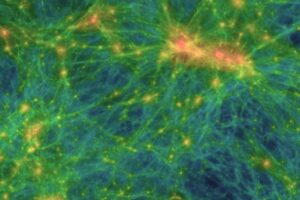
Dark energy influences not only the expansion rate but also the large-scale architecture of the universe. As it drives galaxies apart, the filamentary cosmic web-the vast network of matter connecting galaxy clusters-undergoes gradual reshaping. This ongoing process raises questions about the stability and longevity of astrophysical structures in a universe dominated by dark energy, with observations of galactic motions providing continuous evidence of its pervasive effects.
Significance of Dark Energy in Cosmology
Dark energy fundamentally transforms our comprehension of the universe’s trajectory and ultimate destiny. It challenges existing physical theories and compels scientists to explore new frontiers in understanding the cosmos. Whether it leads to a catastrophic end, cyclical rebirth, or an unforeseen cosmic phenomenon, dark energy’s role is central to modern cosmology and the quest to unravel the universe’s deepest mysteries.
Conclusion: The Ongoing Quest to Understand Dark Energy
The study of dark energy is a driving force behind contemporary astrophysics and cosmology, inspiring both technological advancements and theoretical innovation. As new observational tools become available and scientific models evolve, humanity moves closer to deciphering this enigmatic force. Until then, dark energy remains the unseen agent accelerating the universe’s expansion, symbolizing the profound complexity of nature and the enduring human desire to comprehend the unknown.
FAQ
What is dark energy?
Dark energy is a mysterious form of energy that is responsible for the accelerated expansion of the universe.
How does dark energy affect the universe?
Dark energy exerts a repulsive force that counteracts gravity, causing galaxies to move away from each other at an increasing rate.
What is the cosmological constant?
The cosmological constant is a theoretical description of dark energy introduced by Albert Einstein, representing a constant energy density inherent to empty space.


Leave a Reply