
Short Answer
Understanding Dark Matter
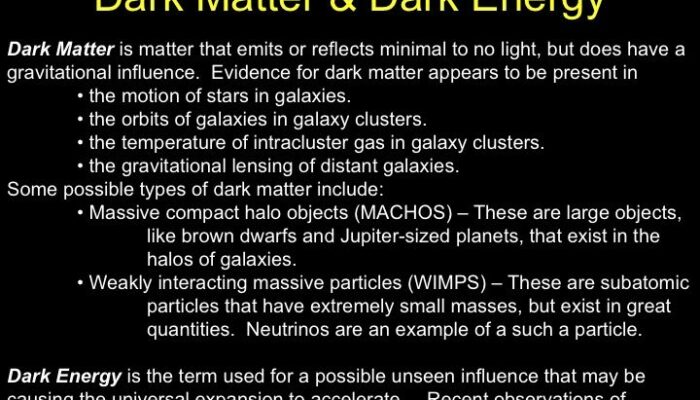
Dark matter is one of the most mysterious and significant components of the universe, accounting for roughly 27% of its total mass-energy content. Unlike ordinary matter, it neither emits nor absorbs light, making it invisible to conventional detection methods. Despite its elusive nature, dark matter plays a crucial role in explaining various cosmic phenomena, from the unexpected rotational speeds of galaxies to the vast cosmic web structure. However, this widely accepted concept also raises profound questions about the foundations of modern physics and whether it might represent a fundamental misconception.
Historical Origins of the Dark Matter Hypothesis
The idea of dark matter emerged in the mid-20th century when astronomers noticed puzzling discrepancies in galactic rotation patterns. Stars located at the edges of galaxies were moving at speeds too high to be justified by the gravitational pull of visible matter alone. This inconsistency led scientists to propose the existence of an unseen mass permeating galaxies, acting as a gravitational scaffold that holds them together. Over time, this hypothesis was reinforced by indirect astrophysical observations and theoretical developments, forming a central pillar of contemporary cosmology.
Challenges in Detecting Dark Matter
Despite decades of intensive efforts, direct detection of dark matter particles remains elusive. Experiments employing highly sensitive detectors in underground laboratories and particle accelerators have yet to identify definitive signals from proposed candidates such as Weakly Interacting Massive Particles (WIMPs) or axions. This persistent absence of evidence has fueled skepticism and prompted scientists to reconsider whether the gravitational anomalies attributed to dark matter might instead indicate a fundamental gap in our understanding of gravity itself.
Alternative Theories: Modified Gravity
In response to the challenges faced by the dark matter paradigm, alternative gravitational theories have been developed. One prominent example is Modified Newtonian Dynamics (MOND), which suggests that Newton’s law of universal gravitation requires modification at extremely low accelerations, such as those found at the outskirts of galaxies. According to MOND, gravity does not weaken as rapidly as classical physics predicts below a certain acceleration threshold, thereby explaining the flat rotation curves of galaxies without invoking invisible matter.
Strengths and Limitations of Modified Gravity
While modified gravity theories like MOND successfully address galactic-scale phenomena, they encounter difficulties when applied to larger cosmological contexts. Observations such as the cosmic microwave background radiation, the formation of large-scale structures, and the dynamics of galaxy clusters align more consistently with models that include dark matter. This contrast highlights a significant tension in astrophysics: dark matter models excel on cosmological scales but remain undetected, whereas modified gravity theories explain certain galactic behaviors but struggle with broader cosmic observations.
Philosophical and Scientific Implications
The reliance on dark matter exemplifies a deeper epistemological challenge in physics. The tendency to introduce increasingly complex hypothetical entities to reconcile theory with observation risks veering toward dogmatism. Historical precedents, such as the ether theory before relativity and the phlogiston theory in combustion science, illustrate how entrenched ideas can delay scientific progress. Dark matter might similarly represent a provisional placeholder, masking a yet-undiscovered principle or law.
Future Directions and Experimental Prospects
Advances in technology promise to shed light on the dark matter enigma. Next-generation particle detectors and astronomical observatories, including the James Webb Space Telescope, are expanding our observational capabilities, enabling more precise measurements of the early universe and cosmic evolution. These tools may either provide indirect evidence supporting dark matter or bolster alternative theories by revealing inconsistencies in the current paradigm.
Intersections with Quantum Physics and Cosmology
The convergence of quantum physics and cosmology opens new avenues for understanding the universe’s fundamental nature. Theories such as quantum gravity, string theory, and emergent spacetime concepts offer frameworks that could unify microscopic and cosmic phenomena. Within this context, dark matter might not be a missing substance but rather an indicator pointing toward a deeper, more comprehensive synthesis of physical laws.
Common Misconceptions About Dark Matter
Dark matter is simply invisible ordinary matter.
Dark matter is distinct from ordinary matter; it does not interact with electromagnetic radiation, making it fundamentally different from known particles like protons and neutrons.
Dark matter has been directly detected.
To date, dark matter has only been inferred through gravitational effects; no direct detection of dark matter particles has been confirmed.
Modified gravity theories have been disproven.
While modified gravity faces challenges on cosmological scales, it remains a viable explanation for certain galactic phenomena and continues to be an active area of research.
Significance of Dark Matter in Science and Beyond
Dark matter is not merely a theoretical curiosity; it is central to our understanding of the universe’s composition, structure, and evolution. Its study drives technological innovation, inspires new physics beyond the Standard Model, and challenges scientists to refine or rethink fundamental laws. Whether dark matter ultimately proves to be a real substance or a signpost toward new physics, its investigation exemplifies the dynamic and self-correcting nature of scientific inquiry.
Conclusion: Embracing the Unknown
Questioning the existence of dark matter is not an act of denial but an invitation to deepen our comprehension of the cosmos. The ongoing debate highlights the provisional nature of scientific knowledge and the importance of remaining open to revolutionary ideas. As research progresses, the mystery of dark matter may lead to transformative insights, reshaping our understanding of reality and our place within the vast cosmic tapestry.
FAQ
What is dark matter?
Dark matter is a form of matter that does not emit or absorb light, making it invisible and detectable only through its gravitational effects.
Why is dark matter important?
Dark matter is crucial for understanding the structure and evolution of the universe, as it constitutes a significant portion of its total mass-energy content.
What are the challenges in detecting dark matter?
Direct detection of dark matter particles has not been achieved due to their elusive nature, leading scientists to explore various theoretical frameworks.

Leave a Reply