
Short Answer
Definition of the Multiverse
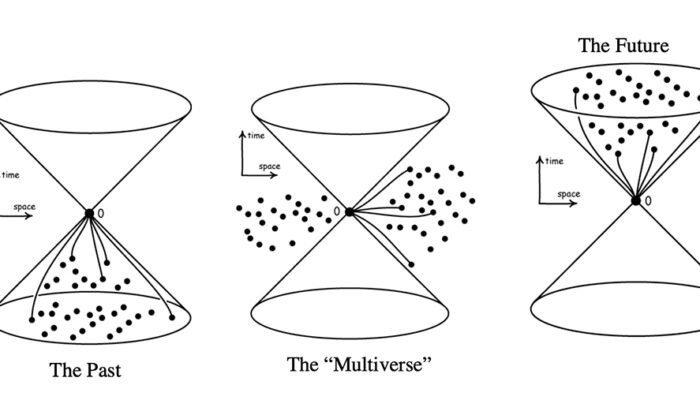
The multiverse concept refers to the theoretical existence of an infinite collection of universes, each with its own distinct realities, physical laws, and historical developments. Rather than viewing our universe as the sole cosmic entity, the multiverse hypothesis suggests that countless other universes coexist, potentially differing in fundamental constants and structures. This idea expands the scope of existence beyond the observable cosmos, inviting profound philosophical and scientific exploration.
- Multiverse:
A hypothetical ensemble of multiple universes, including our own, that together comprise all of reality. - Alternate Realities:
Different versions of existence where events, physical laws, or outcomes vary from those in our universe. - Physical Constants:
Fundamental values such as the speed of light or gravitational constant that may differ across universes.
Historical and Scientific Origins
The multiverse theory emerges from diverse scientific fields, notably quantum mechanics and cosmology. Early interpretations challenge the notion of a singular universe by proposing that every possible outcome of a decision or event spawns a separate, parallel universe. This idea is closely related to the many-worlds interpretation of quantum mechanics, exemplified by Schrödinger’s cat thought experiment, which illustrates how quantum superposition could manifest as multiple realities simultaneously.
Cosmological inflation theory further grounds the multiverse concept in physical science. According to this theory, shortly after the Big Bang, space underwent rapid exponential expansion, creating isolated “bubble” universes within a larger multiversal space. Each bubble evolves independently, potentially governed by unique physical laws and constants, suggesting our universe is just one among an uncountable number of such bubbles.
Mechanisms Behind the Multiverse
The multiverse arises from several theoretical frameworks:
- Quantum Mechanics:
The many-worlds interpretation posits that all possible quantum outcomes occur, each in its own branching universe. - Cosmic Inflation:
Rapid expansion after the Big Bang generates multiple causally disconnected regions, or bubble universes. - String Theory:
Proposes a landscape of possible vacuum states, each corresponding to different universes with varying physical properties.
Mathematical and Theoretical Foundations
While the multiverse concept is largely theoretical, certain mathematical models underpin its plausibility. For example, the inflationary multiverse can be described using equations from general relativity and quantum field theory, where the scalar field driving inflation fluctuates, creating multiple domains.
Key variables and concepts include:
- Inflaton Field (φ): A hypothetical scalar field responsible for cosmic inflation.
- Potential Energy (V(φ)): Determines the dynamics of inflation and the formation of bubble universes.
- Quantum Fluctuations: Random variations in the inflaton field that lead to the nucleation of separate universes.
Philosophical and Existential Implications
The multiverse hypothesis profoundly influences philosophical discourse, particularly regarding the nature of existence and consciousness. The anthropic principle, which states that the universe’s physical laws must allow for observers like us, gains new context when considering multiple universes. It raises questions about whether our universe is uniquely fine-tuned or simply one of many where conditions happen to support life.
This perspective also challenges traditional views on free will and causality, suggesting that every choice might generate a branching universe with alternate outcomes. Such ideas invite deeper reflection on human significance and the meaning of reality within an expansive cosmic framework.
Scientific and Practical Significance
Despite its speculative nature, the multiverse concept stimulates scientific innovation by offering explanations for unresolved phenomena. For instance, variations between universes could shed light on the mysteries of dark matter, dark energy, and the fundamental structure of space-time. By exploring hypothetical universes with different physical laws, researchers can test the robustness of existing theories and develop new models.
Moreover, the multiverse serves as a fertile ground for interdisciplinary collaboration, linking physics, mathematics, philosophy, and even the arts. This synergy enhances public engagement with complex scientific ideas through creative representations and thought experiments.
Common Misconceptions About the Multiverse
The multiverse is proven and observable.
Currently, the multiverse remains a theoretical construct without direct empirical evidence.
The multiverse implies infinite copies of ourselves.
While some interpretations suggest parallel versions, not all universes necessarily contain duplicates of our reality.
The multiverse negates the significance of our universe.
The concept broadens understanding but does not diminish the unique conditions and experiences within our own universe.
Multiverse in Culture and Psychology
Beyond science, the multiverse metaphor resonates in spirituality and psychology, offering a framework for hope and possibility. The idea of infinite alternate realities can provide comfort against existential despair, symbolizing endless potential and diverse life paths. This metaphorical richness encourages introspection and a sense of wonder about the nature of existence.
Conclusion: Embracing the Boundless Cosmos
The multiverse stands as a compelling paradigm that expands our comprehension of reality from a singular universe to a vast, interconnected mosaic of possibilities. It challenges conventional boundaries, inspiring curiosity and ongoing inquiry into the fundamental nature of existence. By contemplating the multiverse, humanity embarks on a journey that not only explores the cosmos but also deepens our understanding of ourselves and our place within the infinite expanse.
FAQ
What is the multiverse?
The multiverse is a theoretical concept that suggests the existence of multiple, potentially infinite universes, each with its own distinct realities and physical laws.
Are there any observable proofs of the multiverse?
Currently, the multiverse remains a theoretical construct without direct empirical evidence.
How does the multiverse relate to quantum mechanics?
The multiverse concept is closely tied to quantum mechanics through the many-worlds interpretation, suggesting that all possible outcomes of quantum events exist in separate, parallel universes.




Leave a Reply