Catching light pulses within the crystalline structure of certain materials evokes a sense of wonder and intellectual curiosity that resonates with the foundational principles of modern physics. The manipulation and monitoring of light, particularly in the form of pulses, has captured the attention of researchers, unlocking a myriad of applications that extend well beyond simple observation. The ability to trap light not only challenges our comprehension of optical phenomena but also offers transformative insights into the realms of photonics, telecommunications, and quantum computing.
Crystals, intrinsically ordered solid materials, exhibit unique optical properties due to their periodic atomic structures. This regular arrangement enables the phenomenon of photonic bandgaps, analogous to electronic bandgaps in semiconductors, which systematically restrict the propagation of certain light frequencies while allowing others to propagate freely. Within this context, the concept of trapping light pulses becomes tangible; it hinges on the interactions between the incoming photonic waves and the periodic lattice of the crystalline material. The result is a compelling interplay that allows for the sustained presence of light within the crystal, effectively ‘capturing’ it in time.
The process of inducing light trapping can be understood through the lens of resonant interactions. When a light pulse enters a crystal at a specific angle and frequency, certain conditions can facilitate the resonant coupling of the light with the crystal’s electronic and vibrational modes. In essence, the crystal’s structure and its associated properties dictate the behavior of light within its bounds, creating opportunities to observe and manipulate light in unprecedented ways. As researchers continue to refine these interactions, the potential for real-time monitoring and manipulation of light pulses expands dramatically.
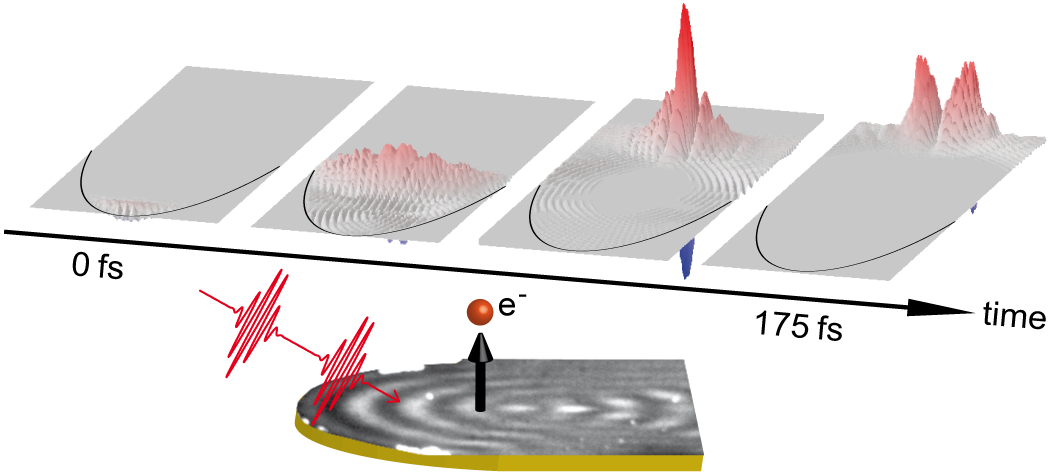
One of the most intriguing aspects of trapping light pulses is the temporal dimension it introduces to the study of optics. Rather than merely observing optical phenomena, researchers can now delve into the dynamics of light as it travels through the crystalline medium. This innovative approach fosters a vivid narrative of light propagation, enabling scientists to visualize how light behaves under various conditions. The real-time monitoring of these pulses has implications for multiple fields, particularly in enhancing our understanding of complex systems, such as nonlinear optics and coherent control of quantum states.
The implications of successfully trapping light within crystals are profound. For instance, in photonic applications, such as optical communication systems, the rapid propagation of data is quintessential. Trapped light pulses could serve as the basis for more efficient signal transmission, overcoming limitations posed by traditional electronic systems. Enhanced signal processing capabilities could also arise from the ability to manipulate light pulses with unprecedented precision, leading to improvements in device miniaturization and functionality.
Furthermore, the confluence of light trapping and quantum mechanics portends a renaissance in quantum information science. The ability to store and retrieve light in a controlled manner aligns elegantly with the principles of quantum state preparation and measurement. Quantum bits (qubits), which are the cornerstone of quantum computing, benefit profoundly from stable and coherent light interactions. Advances in this arena could catalyze breakthroughs in quantum networking, secure communication, and the development of robust quantum algorithms.
However, the journey towards understanding and implementing trapped light pulses is not devoid of challenges. The intrinsic properties of the crystalline materials must be meticulously engineered to ensure optimal conditions for light trapping. Researchers must navigate the delicate balance between enhancing light-matter interactions and maintaining the integrity of the crystal structure. The self-organization of defects and impurities can significantly alter the performance of these materials, posing formidable obstacles in experimental setups.
Recent studies have focused on novel materials, such as photonic lattices and metamaterials, to create artificial structures designed specifically for optimal light trapping. These materials exhibit unusual optical characteristics that facilitate enhanced coupling with light. For example, the employment of nonlinear optical effects within engineered crystals has resulted in a renaissance of research surrounding frequency conversion processes—methods by which a light signal can be modified to operate at a different frequency. This versatility not only opens new avenues for light manipulation but also suggests exciting pathways for future technological applications.
Another pivotal aspect of trapping light pulses lies in the implications for imaging technologies. The capacity to monitor light behavior in real-time leads to developments in optical imaging techniques, where spatial and temporal resolutions can be significantly enhanced. Techniques such as super-resolution microscopy could benefit immensely from the principles of trapped light, allowing for the visualization of structural and biological phenomena at an unprecedented scale and accuracy.
As we advance into this epoch of photonic science, the notion of “crystals that catch light” extends beyond the simplistically enchanting. It embodies a paradigm shift in how we understand and utilize light at the nanoscale. The convergence of material science, optics, and quantum physics creates a fertile ground for innovation, fostering a landscape rife with potential applications that can reshape entire industries.
In conclusion, the exploration of trapped light pulses within crystals challenges conventional perspectives on light-matter interactions. The consummate manipulation of light offers not only a glimpse into the intricate dynamics of photonics but also paves the way for groundbreaking advancements in a plethora of fields, from telecommunications to quantum information science. As researchers continue to unravel the complexities of these interactions, the promise of harnessing light in tangible ways stands poised to captivate the imagination and ambition of future generations of physicists and engineers.