
Short Answer
Definition of Technetium-99m and Its Role in Nuclear Medicine
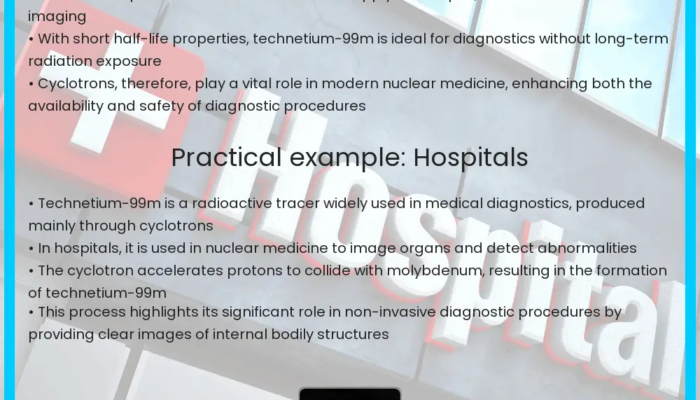
Technetium-99m (Tc-99m) is a widely utilized radioactive isotope in the field of nuclear medicine, primarily employed for diagnostic imaging. It serves as a critical tracer in various medical scans, enabling clinicians to visualize physiological processes and detect abnormalities within the body. The isotope’s favorable properties, including its short half-life and gamma-ray emission, make it ideal for medical imaging applications.
Traditional Production Methods of Tc-99m
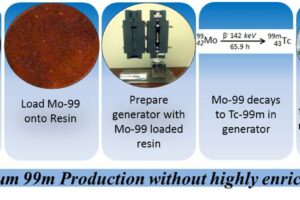
Conventionally, Tc-99m is produced indirectly through the decay of molybdenum-99 (Mo-99), which itself is generated as a fission product in nuclear reactors. This reactor-based production method has been the backbone of the global supply chain for decades. However, it involves complex logistics and dependency on a limited number of aging reactor facilities worldwide. These constraints have historically led to supply interruptions, impacting patient access to essential diagnostic procedures.
- Reactor Dependency:
The reliance on nuclear reactors for Mo-99 production creates vulnerabilities in the supply chain due to maintenance shutdowns, regulatory issues, and geopolitical factors. - Supply Shortages:
Limited reactor availability has occasionally caused shortages, delaying diagnostic imaging and affecting healthcare delivery.
Emergence of Cyclotron Technology in Tc-99m Production
Cyclotrons, originally developed as particle accelerators for research and therapeutic isotope production, have recently gained attention as an alternative means to produce Tc-99m directly. By bombarding molybdenum targets with protons, cyclotrons can induce nuclear reactions that yield Tc-99m without the need for reactor-based Mo-99. This direct production method offers a promising solution to overcome the limitations of traditional supply chains.
Advantages of Cyclotron-Based Production
- Decentralized Production:
Cyclotrons can be installed closer to hospitals and imaging centers, reducing transportation times and logistical complexities. - Enhanced Supply Stability:
Localized production mitigates risks associated with reactor outages and geopolitical disruptions. - Improved Safety Profile:
Cyclotron operations avoid the use of fission processes, thereby reducing regulatory burdens and safety concerns linked to nuclear reactors. - Economic Efficiency:
Lower regulatory overhead and operational costs make cyclotron production financially attractive.
Technical Aspects and Innovations in Cyclotron Production
Recent advancements in cyclotron technology have significantly improved isotope yield and quality. Innovations such as superconducting magnets and enhanced target materials have optimized the efficiency of Tc-99m generation. These technological strides contribute to the growing appeal of cyclotron-produced radiopharmaceuticals in clinical settings.
Production Process Overview
The cyclotron accelerates protons to high energies, which then collide with enriched molybdenum targets. This interaction induces nuclear reactions that produce Tc-99m directly. The isotope is subsequently extracted and purified for medical use.
Importance of Fresh Tc-99m Supply
Given Tc-99m’s short half-life of approximately six hours, timely availability is crucial to minimize radioactive decay and maximize diagnostic efficacy. Cyclotron-based production enables more frequent and localized isotope generation, ensuring a steady supply that aligns closely with clinical demand. This approach enhances patient outcomes by providing fresh, high-quality radiopharmaceuticals for imaging procedures.
Case Studies and Real-World Applications
Several pioneering healthcare institutions have successfully implemented local cyclotron facilities dedicated to Tc-99m production. These initiatives demonstrate the feasibility and benefits of decentralized isotope manufacturing, including reduced transportation emissions and improved sustainability. Such models are increasingly viewed as the future standard for radiopharmaceutical supply.
Challenges and Considerations in Transitioning to Cyclotron Production
- Standardization and Quality Control:
Establishing uniform protocols to ensure the safety and efficacy of cyclotron-produced Tc-99m is essential. - Infrastructure and Training:
Integrating cyclotron technology into existing healthcare systems requires investment in facilities and specialized personnel training. - Regulatory Adaptation:
Regulatory frameworks must evolve to accommodate the unique aspects of cyclotron-based isotope production.
Why Cyclotron Production of Tc-99m Matters
The shift toward cyclotron-generated Tc-99m represents a transformative development in nuclear medicine. By enhancing supply reliability, reducing safety risks, and promoting sustainability, this approach addresses critical challenges faced by the healthcare industry. Moreover, it fosters innovation and investment in medical technology, ultimately improving diagnostic capabilities and patient care worldwide.
Conclusion: The Future of Tc-99m Production
Advancements in cyclotron technology are ushering in a new era for the production of Technetium-99m, with the potential to revolutionize nuclear medicine practices. This emerging paradigm challenges traditional methods and opens avenues for more efficient, safe, and accessible radiopharmaceutical supply. As stakeholders embrace these changes, the future promises robust and sustainable access to vital diagnostic isotopes, ensuring continued progress in medical imaging and patient outcomes.
FAQ
What is Technetium-99m?
Technetium-99m is a radioactive isotope widely used in nuclear medicine for diagnostic imaging.
How is Technetium-99m produced?
Traditionally, it is produced via the decay of molybdenum-99 in nuclear reactors, but cyclotron technology allows for direct production.
What are the advantages of cyclotron-based Technetium-99m production?
Advantages include decentralized production, enhanced supply stability, improved safety, and economic efficiency.
Why is timely availability of Technetium-99m important?
Due to its short half-life, timely availability is crucial for effective diagnostic imaging.



Leave a Reply